Our Wall
An anonymous social network built on one premise: people perform online because they're afraid. Remove identity, and the wall shows what people actually think. I designed the product logic, built v1 in a week with AI-assisted code, survived a launch-day attack, and shipped a rebuilt v2 alongside a community developer who found the vulnerability himself.
Why
Social networks optimise for performance. People post what gets engagement, not what they actually think — a curated version of themselves. Threads fills with fake income screenshots. Instagram with highlight reels. X with takes performed for an audience. I wanted to build the opposite: no profiles, no followers, no reputation to protect. Just thoughts, appearing and disappearing — like chalk on a wall. Anonymity isn't an add-on here — it's the foundation of the product.
What
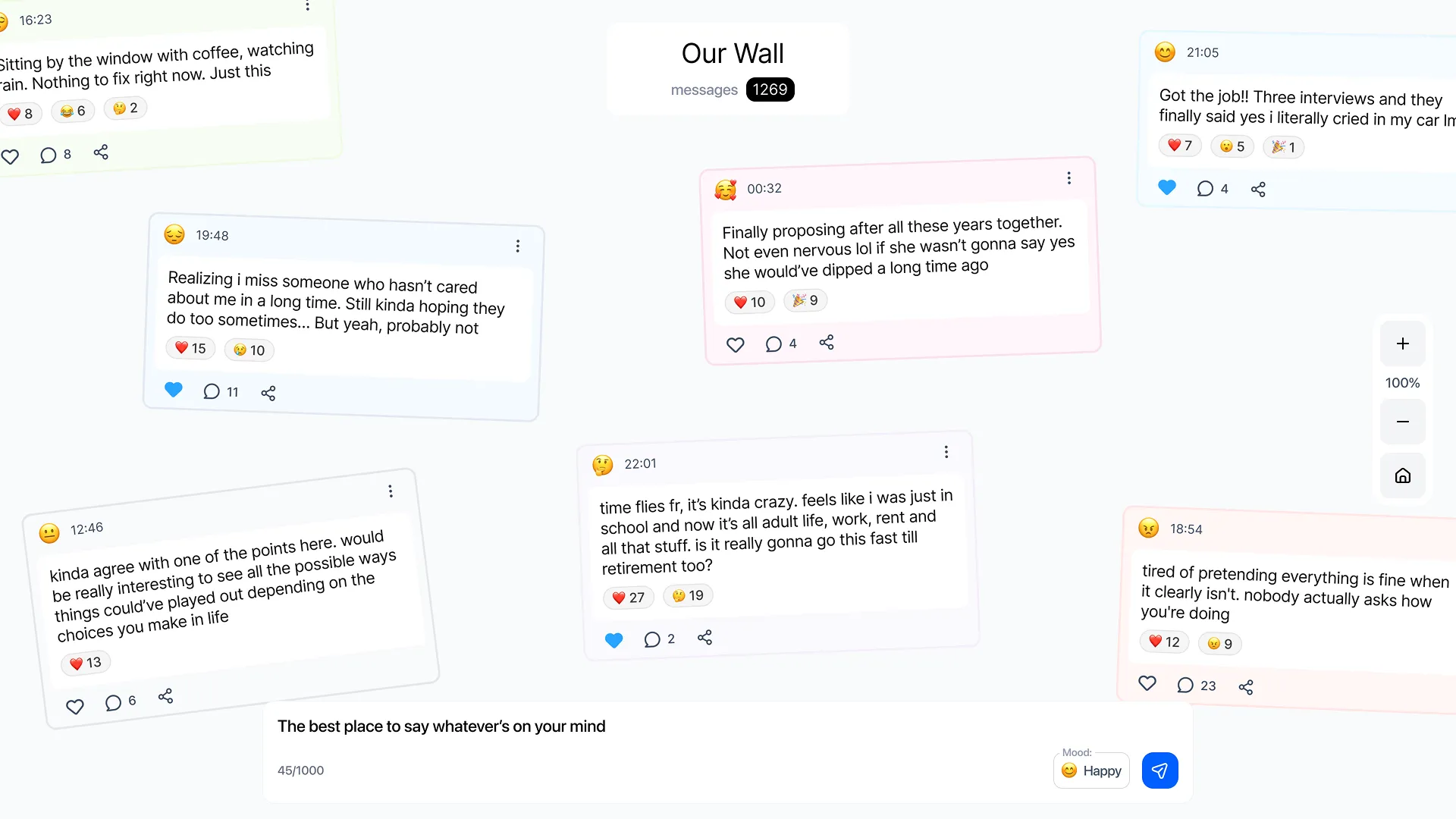
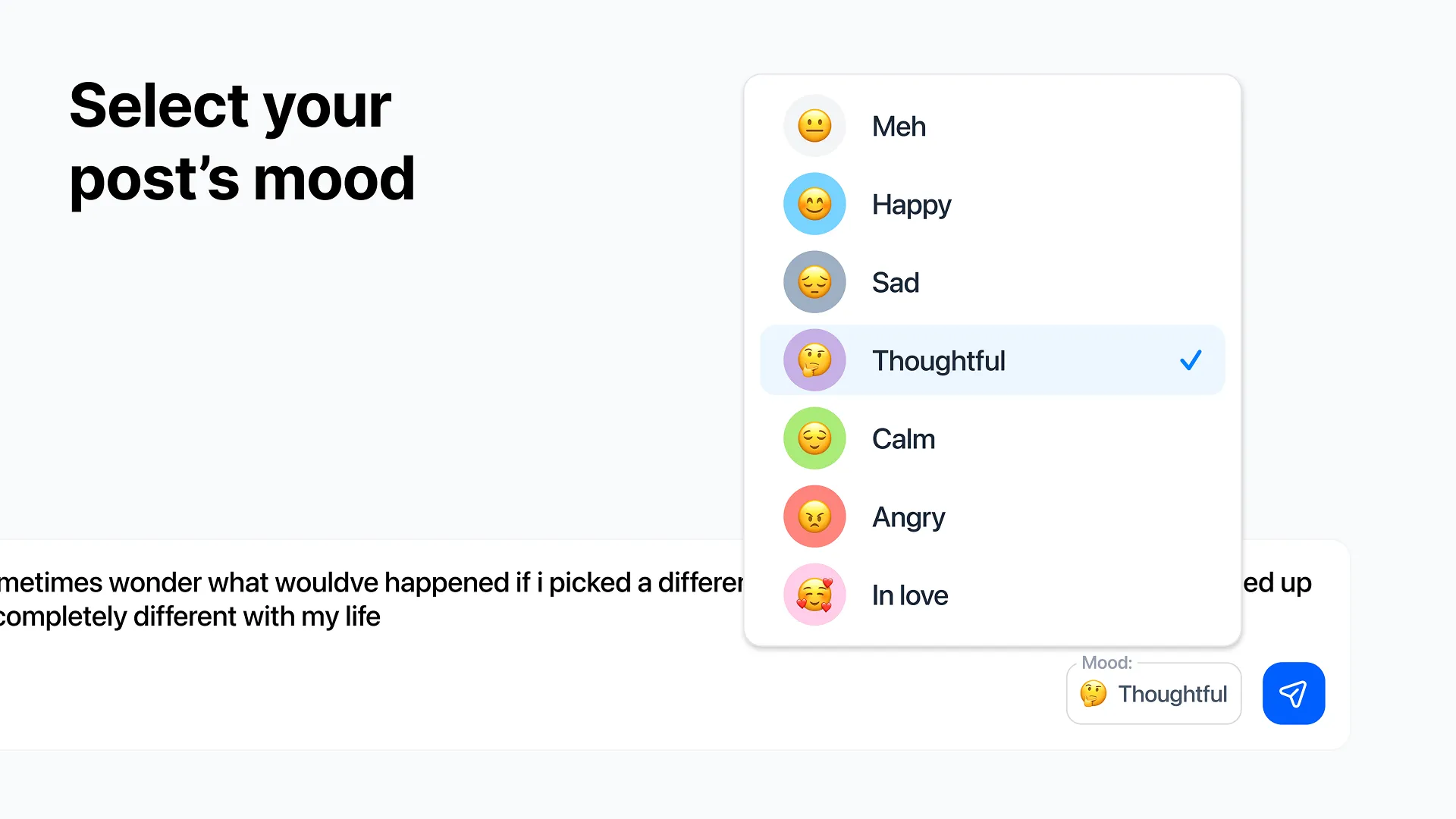
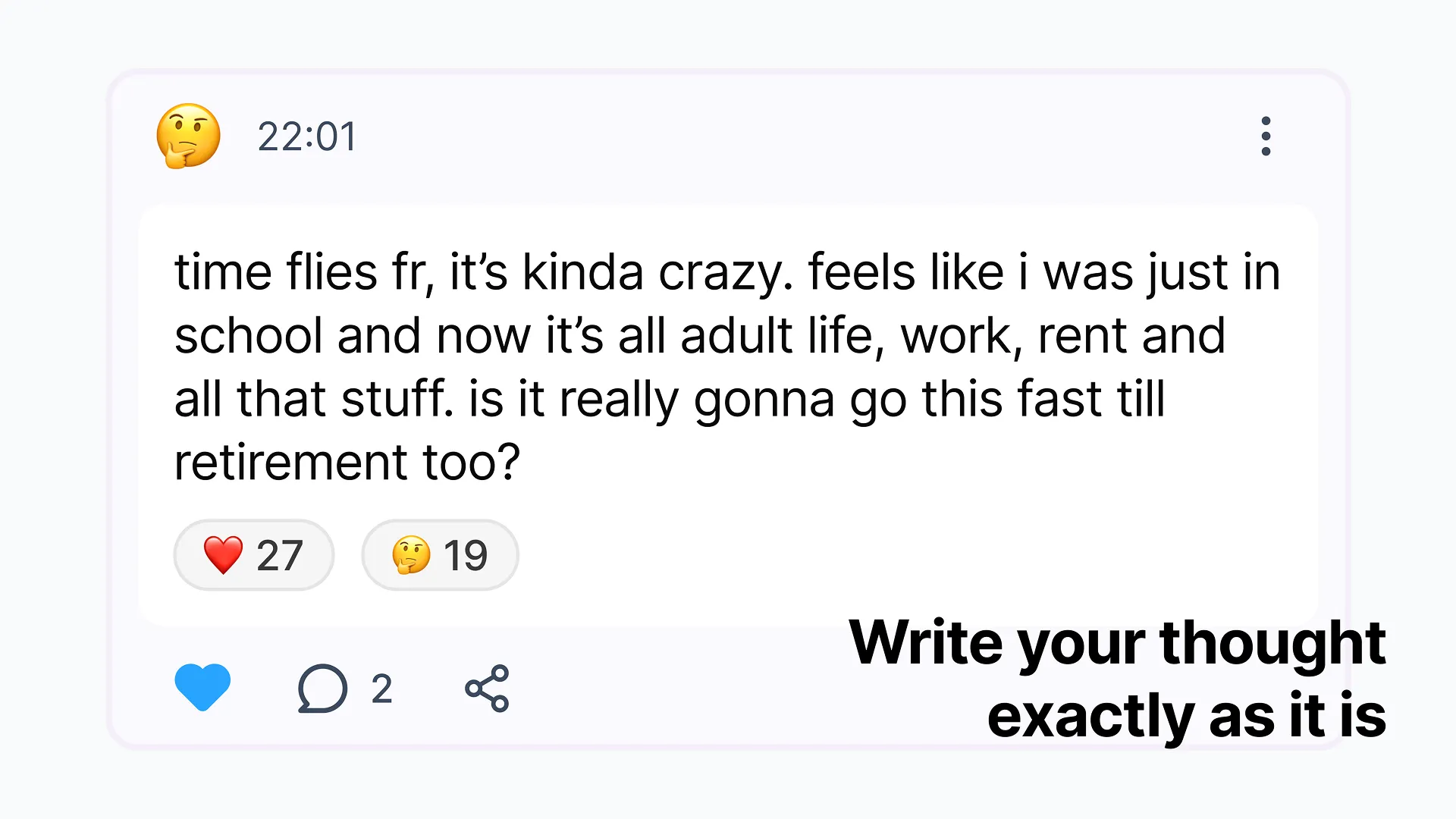
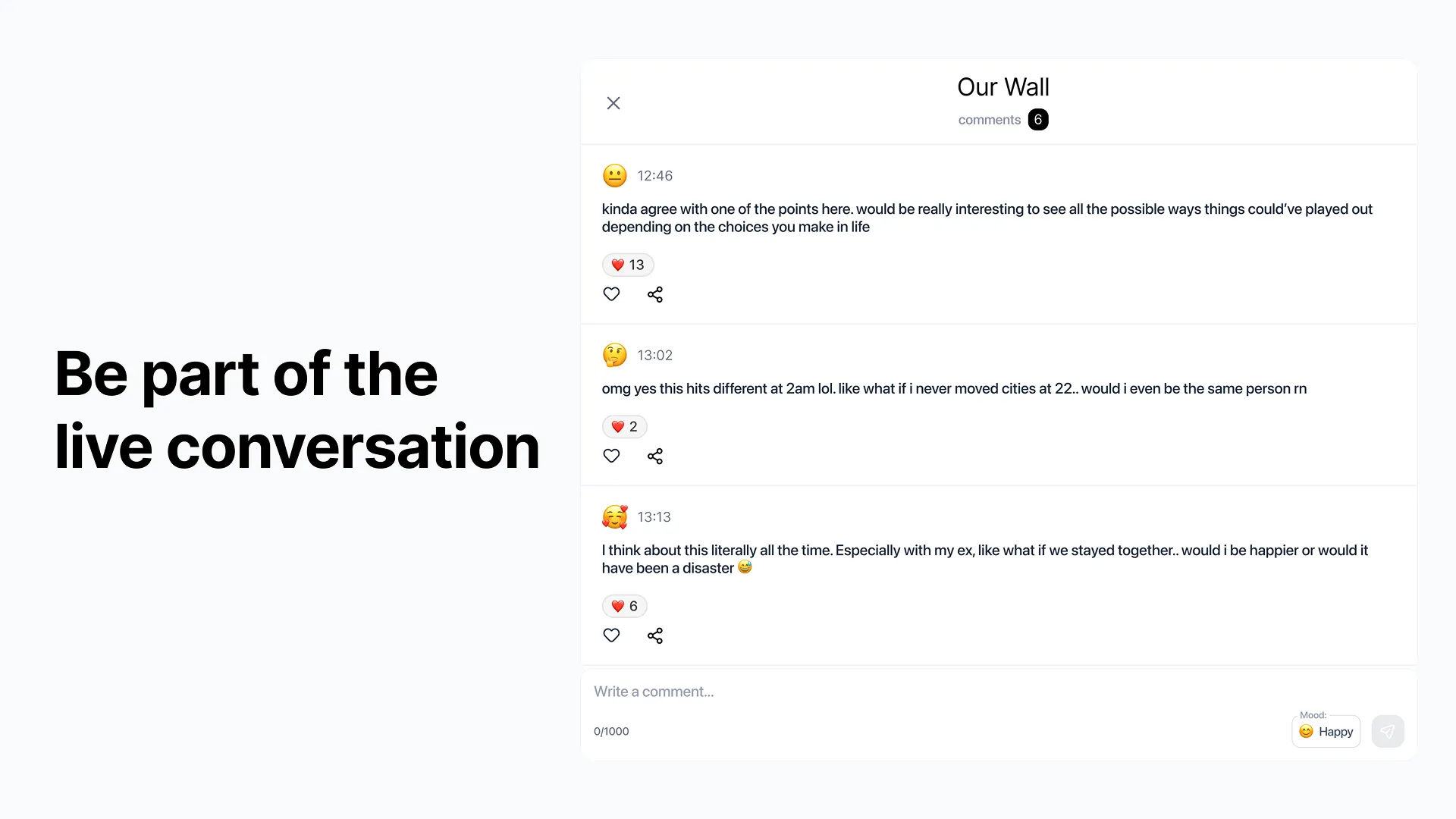
Before a single line of code, I designed the full product logic: ephemeral timeline, mood system, reactions, crowdsourced moderation. The mood system tags every thought with an emotional state — each mood has its own emoji and colour-coded card on the wall. Reactions are a set of emojis with per-type counters. Moderation is crowdsourced: five reports auto-remove a post; the admin reviews flagged removals as a safety net against unfair triggers — a workable solution at current scale, but stronger architecture is needed for growth. The FOMO mechanic is deliberate: posts disappear after a set window, creating urgency to read now rather than scroll later. I iterated on the window length based on user behaviour: started with midnight deletion, moved to 24-hour personal timers, then extended to one week as organic traffic stabilised. Comments came after launch — I asked the users who'd shown up what was missing, and the answer was unanimous: comments. We shipped them.
How
Logic first, then code. I mapped every mechanic before opening the editor. I shipped v1 in a week with AI-assisted development: described the product to the model, iterated on the output, adjusted visual and logic, deployed to server. The process became a YouTube video showing that a working social network MVP can be built without a full-stack background. The video brought the first users — and the first attack: DDoS, spam injection, site defacement via the vulnerability they found. I took the server down. In the comments under the video, one of the people who'd broken in left a public message: he'd found the hole and could fix it. We talked. He completely rebuilt the architecture. v2 launched on a robust stack (React, Bun, PostgreSQL) featuring WebSocket integrations, a custom Python ML service for moderation, and a DPoP cryptographic security layer. The developer joined through the quality of the idea, not a job posting.
What it looks like
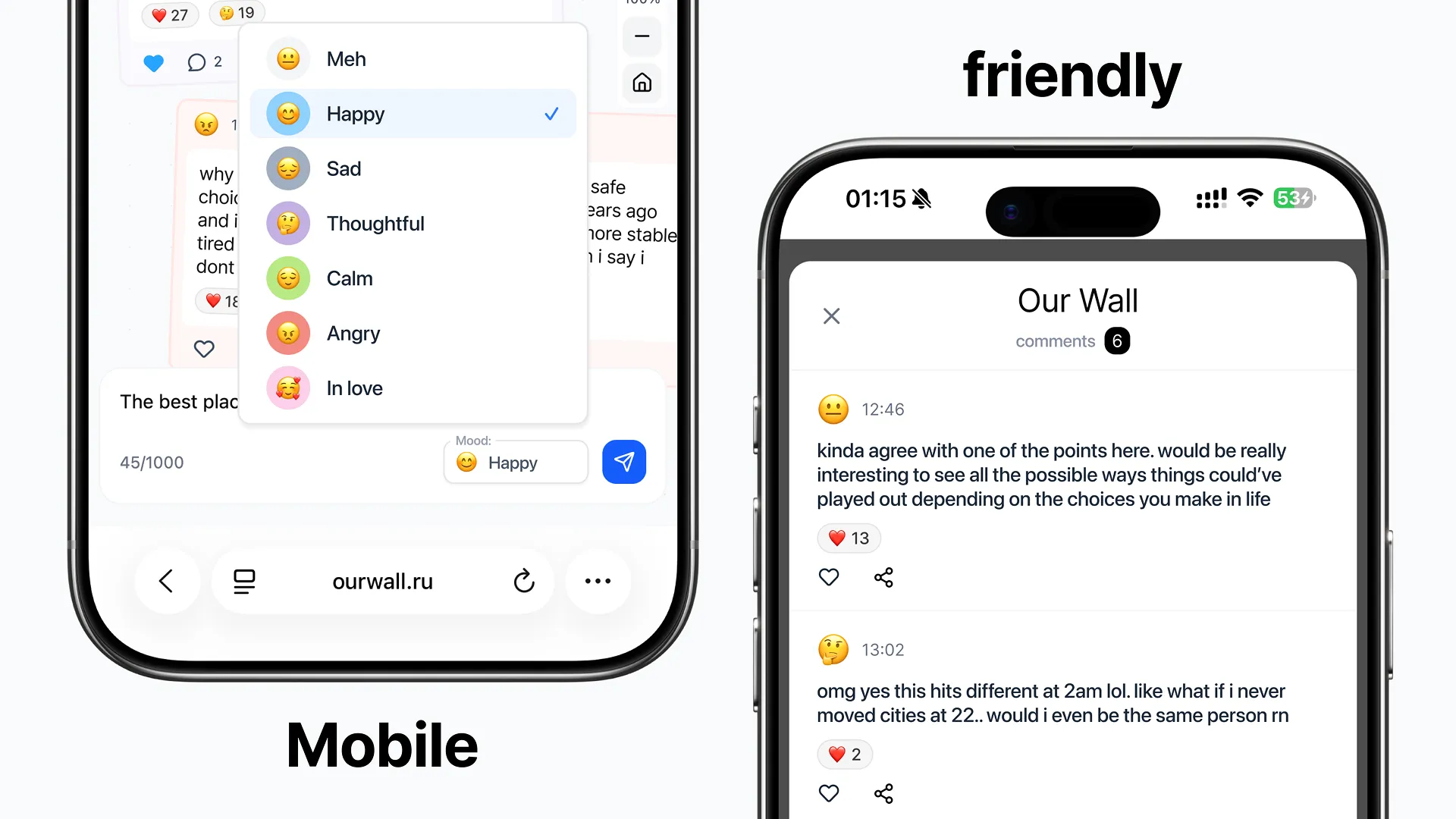
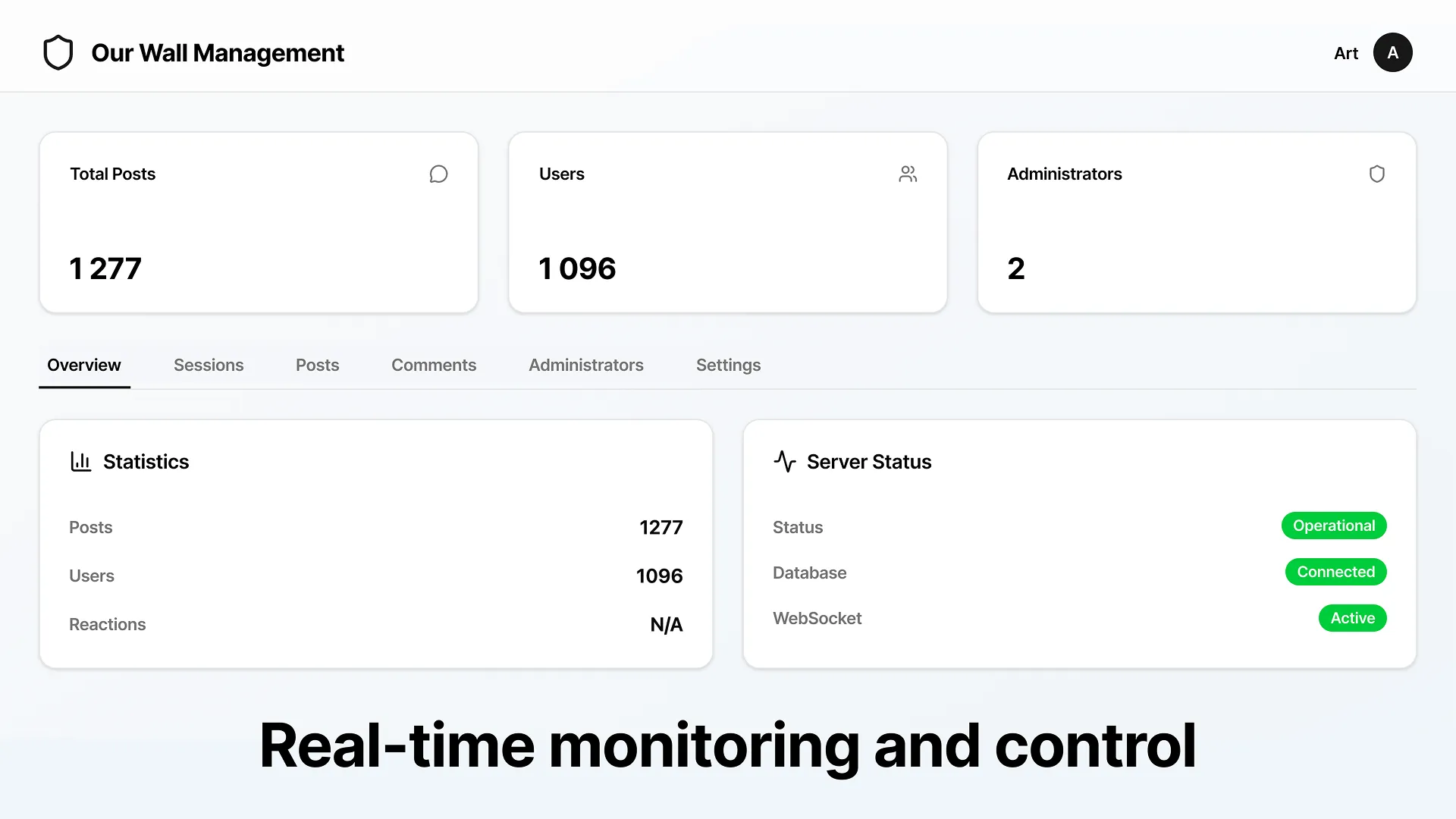
What we delivered
Full social network MVP — product logic, UI, and deployment — built solo with AI-assisted code
1,311 posts in the live feed · single YouTube video as the only traffic source · zero marketing spend
FOMO window evolved: midnight delete → 24h personal timer → 7-day window. Each change driven by user behaviour, not preference
Crowdsourced moderation in production — 1,305 spam/inappropriate posts removed at this threshold, against 1,311 legitimate ones kept. Admin reviews flagged posts as a safety net while the user base scales.
Our Wall lives at ourwall.ru — organic traffic only, zero marketing budget. Today: 1,132 users and 1,311 posts in the live feed. The mood system, reactions, comments, and crowdsourced moderation all work in production. Active development continues with the developer who came in from the v1 video comments. Next focus: stronger auto-moderation, internationalisation, and organic social-first growth. Investment is optional, not required.
Security is the foundation, not the final step. In the MVP I leaned hard into features. I'd come at it from the other side now: protection against attacks (DDoS, injections, bots), backend access controls, authentication — designed at the architecture stage, not "later". The launch-day attack could have been prevented.
Crowdsourced moderation works, but it's not enough. Five reports is a solid baseline, but it can't keep up with volume. An auto-detection algorithm at the post level — before content lands on the wall — is what's needed.
Anonymity is a mode, not the foundation of the product. I built the product around anonymity as the central premise. Real user behaviour told a different story: many users want to be heard and seen as authors. If I were relaunching today, I'd ship both modes inside the same product — a toggle: "here I'm Alex, here I'm anonymous".
Need to ship an MVP, not mock one up?
AI-assisted prototyping + product thinking — from idea to live product in a week.
Book an intro callor email art.androsov@gmail.com